
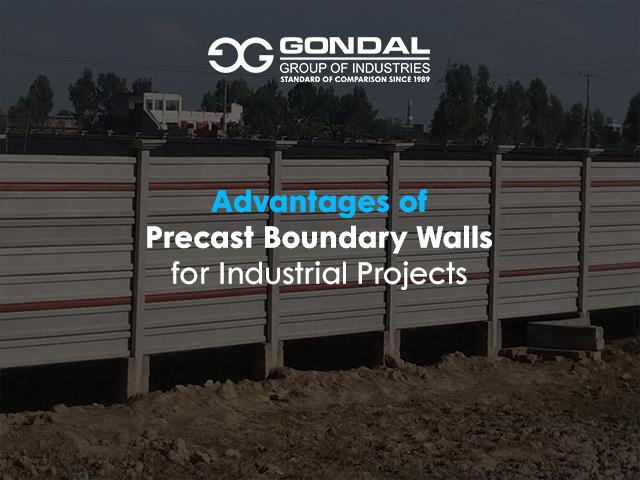
Security, durability, and construction speed are essential considerations for any industrial development. Whether it's a manufacturing plant, warehouse, logistics centre, power facility, or industrial estate, a strong and reliable boundary wall is one of the first structures built on-site. Traditionally, brick and block masonry walls have been the preferred option, but modern industrial projects are increasingly turning to precast boundary walls for their efficiency and long-term value.
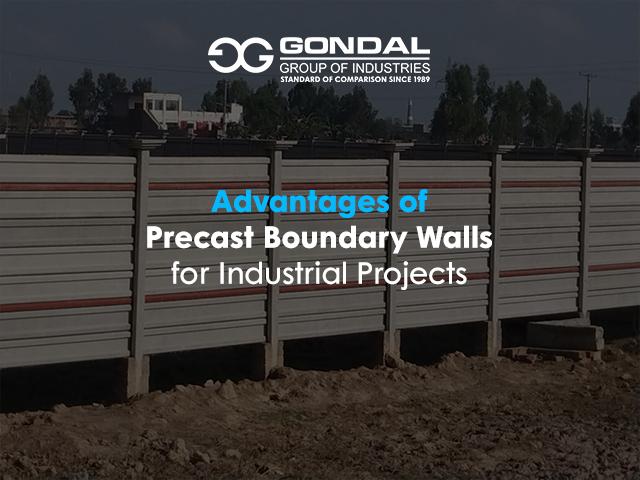
Manufactured in a controlled factory environment and installed directly on-site, precast boundary walls offer a practical solution for projects that require faster completion, consistent quality, and reduced maintenance. As Pakistan's industrial sector continues to expand, precast boundary walls are becoming an integral part of modern construction practices.
Faster Installation Saves Valuable Time
One of the biggest advantages of precast boundary walls is the speed of installation.
Unlike conventional masonry walls, which require excavation, bricklaying, plastering, and curing, precast wall panels are manufactured before they arrive on-site. Once the foundation and support columns are ready, the panels can be installed quickly using lifting equipment.
This parallel approach allows construction teams to complete perimeter security much earlier in the project, helping other site activities progress without delay.
For industrial developments operating on tight schedules, reducing construction time can have a significant impact on overall project delivery.
Consistent Manufacturing Quality
Quality control is one of the key strengths of precast concrete.
Since wall panels are produced in a factory under controlled conditions, manufacturers can maintain consistent concrete mixes, curing methods, reinforcement placement, and dimensional accuracy. This level of precision is difficult to achieve with traditional on-site construction, where workmanship and weather conditions may vary.
The result is a stronger, more uniform boundary wall that performs reliably throughout its service life.
Enhanced Durability in Harsh Environments
Industrial facilities often operate in demanding environments where boundary walls are exposed to heat, rain, moisture, dust, and industrial pollutants.
Precast concrete is engineered to withstand these conditions while maintaining its structural integrity. Unlike conventional masonry, which may develop cracks or deteriorate over time, properly manufactured precast panels offer excellent resistance to weathering and daily wear.
Their robust construction makes them suitable for factories, warehouses, industrial parks, and infrastructure projects across Pakistan.
Reduced Labour Requirements
Traditional boundary wall construction requires multiple skilled trades working over an extended period.
Precast systems simplify the process because most of the work is completed at the manufacturing facility. On-site construction primarily involves preparing foundations, positioning columns, and installing the wall panels.
This reduces labour requirements, improves productivity, and minimises congestion on active construction sites.
For large industrial projects, lower labour demand can contribute to both cost savings and improved project management.
Improved Site Security
Industrial sites often need secure perimeter protection from the earliest stages of construction.
Because precast boundary walls can be installed rapidly, they allow developers to establish secure site boundaries much sooner than conventional masonry walls. Earlier perimeter protection helps safeguard equipment, materials, and ongoing construction activities.
For operational facilities, durable boundary walls also contribute to improved security and privacy throughout the life of the project.
Lower Maintenance Over Time
Maintenance costs are an important consideration for industrial property owners.
Precast boundary walls are designed to deliver long-term durability with minimal upkeep. Their dense concrete construction resists moisture, weather exposure, and everyday impacts, reducing the likelihood of frequent repairs.
Compared with traditional brick walls that may require periodic repointing or surface repairs, precast systems generally offer lower maintenance requirements throughout their service life.
Cost Efficiency Across the Project Lifecycle
Although initial project costs vary depending on design and specifications, precast boundary walls often provide better overall value when considering the complete construction process.
Their advantages include:
- Faster installation
- Reduced labour costs
- Consistent manufacturing quality
- Lower material waste
- Minimal maintenance
- Long service life
When these factors are evaluated together, precast boundary walls can deliver significant lifecycle savings for industrial developments.
Flexible Design Options
Modern precast boundary walls are available in various heights, panel designs, and finishes to suit different project requirements.
Manufacturers can customise wall systems to meet structural, architectural, or security needs while maintaining production efficiency. Decorative finishes, textured surfaces, and integrated security features can also be incorporated where required.
This flexibility allows developers to balance functionality with visual appeal.
Supporting Sustainable Construction
Sustainability has become an important objective across the construction industry.
Precast manufacturing helps reduce material waste through controlled production processes and efficient use of raw materials. Factory-based production also minimises on-site environmental impact by reducing construction debris, noise, and labour-intensive activities.
The long service life of precast concrete further contributes to sustainable construction by reducing the need for replacement and major repairs.
Ideal Applications for Precast Boundary Walls
Precast boundary walls are widely used across industrial and infrastructure projects, including:
- Manufacturing plants
- Warehouses
- Industrial estates
- Logistics centres
- Power plants
- Commercial developments
- Agricultural facilities
- Government and infrastructure projects
Their versatility makes them suitable for projects requiring secure, durable, and quickly installed perimeter protection.
Conclusion
Precast boundary walls offer a modern alternative to conventional masonry construction by combining speed, durability, quality, and long-term value. Their factory-controlled manufacturing process ensures consistent performance, while rapid installation helps industrial projects stay on schedule and reduce labour requirements.
As industrial construction continues to grow across Pakistan, precast boundary walls are becoming the preferred solution for developers seeking reliable perimeter security with minimal maintenance. With advanced manufacturing capabilities and expertise in precast concrete solutions, Gondal Group of Industries provides high-quality boundary wall systems designed to meet the demands of today's industrial and commercial projects.