
As industrial development continues to accelerate across Pakistan, builders and developers are increasingly seeking construction solutions that combine speed, durability, and cost efficiency. Precast concrete has emerged as one of the most valuable materials for large-scale industrial projects due to its strength, consistency, and ability to significantly reduce construction timelines.
Manufactured in controlled factory environments and installed on-site, precast concrete components offer superior quality and performance compared to many traditional construction methods. From warehouses and manufacturing plants to logistics hubs and infrastructure developments, precast concrete is transforming how industrial facilities are built.
Why Precast Concrete Is Ideal for Industrial Construction
Industrial projects often involve tight schedules, large structural requirements, and demanding operational conditions. Precast concrete addresses these challenges by providing ready-to-install components that reduce on-site work and improve construction efficiency.
Key advantages include:
- Faster project completion
- Consistent product quality
- Reduced labor requirements
- Lower material waste
- Improved structural durability
- Minimal maintenance needs
These benefits make precast concrete a preferred choice for industrial developments that require long-term performance and reliability.
Precast Boundary Walls
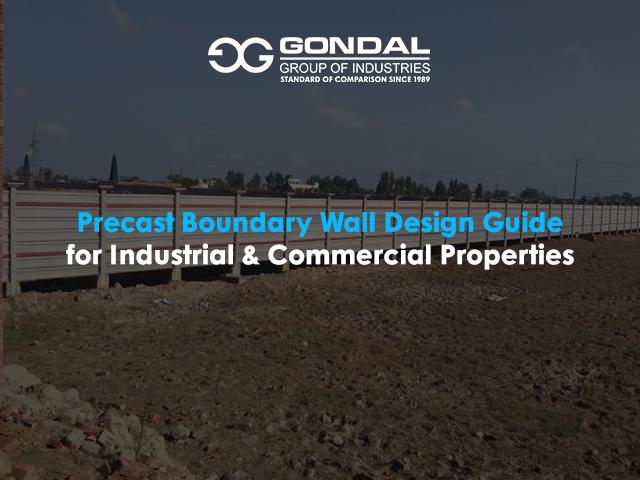
One of the most common industrial applications of precast concrete is boundary wall construction.
Factories, warehouses, industrial estates, and logistics facilities require secure perimeter protection. Traditional masonry walls can take weeks or months to complete, while precast boundary walls can be installed quickly with minimal site disruption.
Precast wall panels provide:
- Faster installation
- Consistent structural strength
- Improved security
- Reduced labor costs
- Long service life
This makes them a practical solution for industrial projects operating under strict timelines.
Industrial Warehouse Structures
Warehouses require strong structural systems capable of supporting large loads while maximizing usable space.
Precast concrete columns, beams, and wall panels are frequently used to create durable warehouse structures. Because these components are manufactured with precision, installation is faster and construction quality remains consistent.
The durability of precast concrete also makes it well-suited for facilities exposed to heavy equipment, vehicle traffic, and continuous operational use.
Manufacturing Facilities
Manufacturing plants often demand robust structures capable of supporting machinery, production equipment, and dynamic operational loads.
Precast concrete elements are commonly used for:
- Structural columns
- Load-bearing walls
- Production halls
- Equipment support structures
- Utility buildings
The material's strength and durability help ensure stable long-term performance in challenging industrial environments.
Logistics and Distribution Centers
Pakistan's growing logistics sector has increased demand for large distribution facilities that can be constructed quickly and efficiently.
Precast concrete enables rapid construction of logistics centers by reducing the need for extensive on-site casting and curing. Components arrive ready for installation, allowing facilities to become operational sooner.
For businesses managing supply chains and distribution networks, faster project completion translates directly into improved business efficiency.
Industrial Flooring Systems
Industrial floors must withstand heavy loads, continuous traffic, and demanding operating conditions.
Precast concrete flooring components offer high strength and excellent durability. These systems are frequently used in:
- Warehouses
- Manufacturing plants
- Storage facilities
- Transportation hubs
Properly engineered precast flooring provides long-term performance with reduced maintenance requirements.
Utility and Service Buildings
Industrial developments often include supporting infrastructure such as electrical rooms, control buildings, water treatment facilities, and maintenance structures.
Precast concrete is widely used for these auxiliary buildings because it provides rapid construction and reliable structural performance. Factory-produced components ensure consistent quality while minimizing site-related delays.
Infrastructure Within Industrial Parks
Large industrial zones frequently require supporting infrastructure such as drainage systems, retaining walls, and utility structures.
Precast concrete plays an important role in these applications due to its strength and adaptability. Common infrastructure uses include:
- Drainage channels
- Culverts
- Retaining walls
- Cable trenches
- Utility chambers
Using precast solutions improves construction efficiency while maintaining long-term durability.
Cold Storage and Specialized Facilities
Cold storage facilities require durable building materials that can support insulation systems and maintain structural stability under varying temperature conditions.
Precast concrete performs exceptionally well in these environments due to its strength, thermal mass, and resistance to moisture-related deterioration.
Its durability makes it suitable for food storage, pharmaceutical facilities, and temperature-controlled industrial operations.
Multi-Story Industrial Buildings
As industrial land becomes more valuable, some developers are investing in multi-level industrial and commercial structures.
Precast concrete systems provide a practical solution for these projects by offering high load-bearing capacity and efficient construction methods. Structural components can be manufactured simultaneously with site preparation, reducing overall project duration.
This approach allows developers to maximize space while maintaining structural reliability.
Supporting Sustainable Industrial Development
Sustainability is becoming increasingly important in industrial construction. Precast concrete contributes to more sustainable building practices by reducing material waste, improving resource efficiency, and minimizing on-site construction activities.
Controlled manufacturing environments help optimize material usage, while the long lifespan of precast components reduces the need for future repairs and replacements.
These benefits support environmentally responsible construction without compromising performance.
The Future of Industrial Construction
As industrial construction continues to evolve, precast concrete is expected to play an even larger role in delivering efficient, durable, and scalable building solutions.
Its ability to accelerate project timelines while maintaining high structural standards makes it particularly valuable for Pakistan's expanding industrial sector.
Conclusion
Precast concrete has become a cornerstone of modern industrial construction due to its versatility, durability, and speed of installation. From boundary walls and warehouses to manufacturing facilities and industrial infrastructure, its applications continue to expand across large-scale projects.
As developers seek faster and more efficient construction methods, precast concrete provides a reliable solution that supports long-term performance and operational success. Companies like Gondal Group of Industries continue to contribute to this growth by delivering high-quality precast concrete solutions designed for the evolving needs of Pakistan's industrial sector.