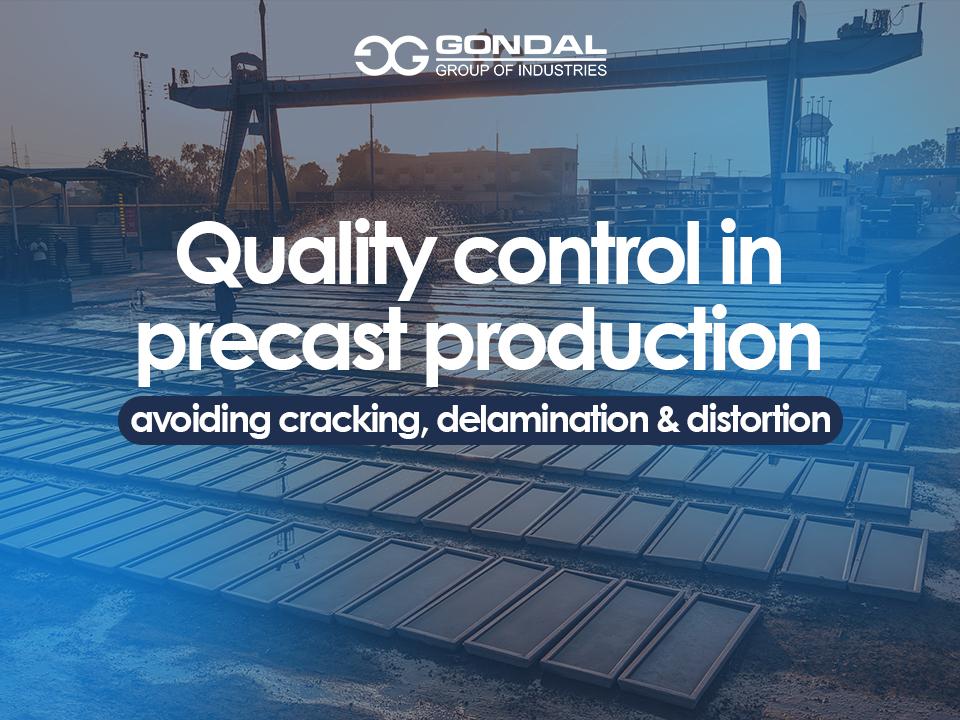

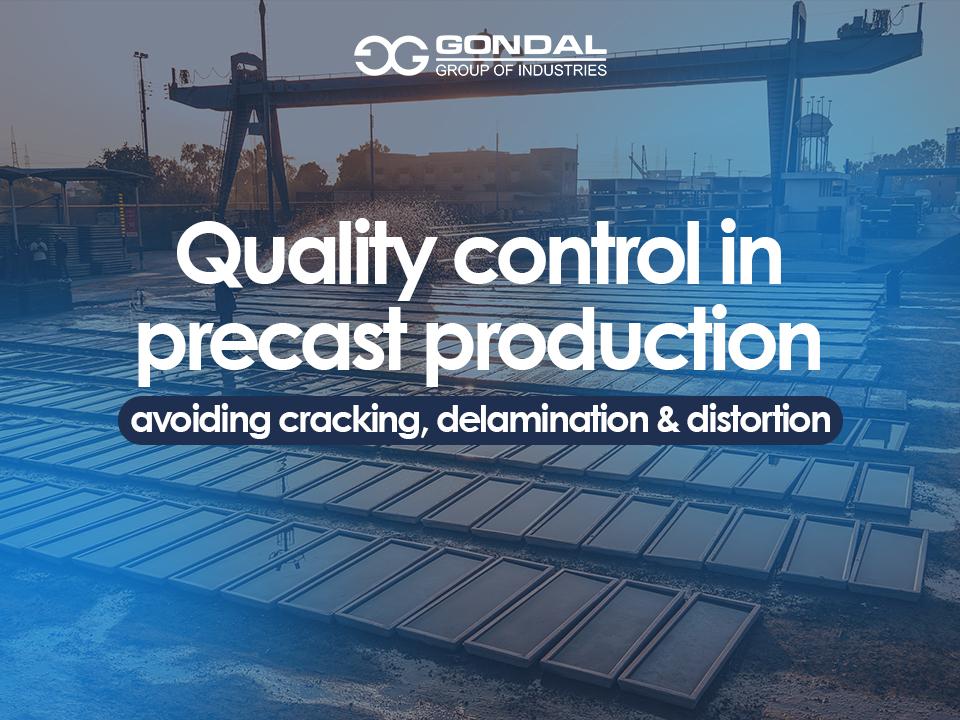
In Pakistan, precast concrete has emerged as a critical constituent of contemporary construction due to its strength, speed and cost effectiveness. But while precast technology offers many advantages, maintaining quality control in precast production is the key to consistent performance and long-term durability.
Failure to consider quality control may result in cracking, delamination, and distortion, which are problems that deteriorate structural integrity and aesthetics.
Why Quality Control In Precast Production Is Crucial?
Material consistency, curing conditions, and handling are some of the factors that determine the success of precast systems. Minor errors would result in defects that jeopardize the reliability of the structure.
The main reason as to why quality control is important:
- Maintains consistent strength and outlook of precast elements.
- Crack and structural failure reduction.
- Enhances when being transported and installed.
- Prolongs life cycle of buildings.
- Develops customer confidence and fulfills global construction premises.
Without proper quality control in precast production, projects can face high maintenance costs and early deterioration, especially in Pakistan’s diverse climate.
Common Issues In Precast Production
Let’s look at the three most common issues and how effective quality control can prevent them:
-
Cracking
Cracks may occur due to various factors, including uneven curing, excessive vibration, improper mix design, or temperature variations.
Here is how to avod cracking:
- Use a well-balanced concrete mix with suitable water-cement ratios.
- Control vibration and minimize air pockets during casting.
- Maintain uniform curing conditions with proper temperature and moisture.
- Handle products carefully during demolding and transportation.
In Pakistani climate, where high temperatures and dryness can accelerate shrinkage, using moisture retention covers or steam curing ensures better results.
-
Delamination
Delamination refers to shedding of surface layers of the main concrete body. It typically arises when completion operations are invented too soon, before more water has evaporated.
Here is how to avoid delamination:
- Wait until surface moisture is evaporated.
- Do not allow bleed water to be trapped on the surface.
- Make sure that there is appropriate airflow during drying.
- Apply surface protecting sealers or coatings to last longer.
- Post casting inspection assists in early detection of delamination before assembling of components.
-
Distortion
Distortion occurs when precast items are warped or displaced as a result of uneven loading, lifting mistakes or temperature variations during curing.
Here is how to avoid distortion:
- Apply the correct reinforcement and lifting anchors.
- Mold and support design to ensure accuracy of shape.
- Even Cure: Do not heat or cool suddenly.
- Teach the train workers how to handle large panels and beams correctly.
- This problem can be reduced through proper alignment of molds and temperature monitoring during mass production.
Steps For Effective Quality Control In Precast Production
- Material Testing: Ensure cement, aggregates, and steel reinforcement meet the standards for strength and purity.
- Mix Design Control: Calibrate mixing equipment regularly and stick to approved proportions.
- Mold Inspection: Check for wear, deformation, or contamination before each use.
- Curing Supervision: Maintain constant temperature and humidity to achieve desired strength.
- Dimensional Verification: Measure length, thickness, and surface flatness precisely
- Final Inspection: Review all products visually and mechanically before delivery.
Additional Tips:
- Introducing digital monitoring systems and routine audits, as practiced by advanced manufactures like Gondal Group, ensures higher precision, and fewer project rejections.
- Workers should be regularly trained to recognize early signs of defects, follow safety protocols, and understand curing time requirements.
- Documenting evry process, from batching to delivery, provides traceable proof of quality compliance.
Conclusion
By focusing on accurate mix design, controlled curing, and careful handling, companies can eliminate cracking, delamination, and distortion from their processes.
Because consistent quality not just strengthen structures, but also ensures that every beam, panel, and slab stands as a symbol of safety, precision, and progress for pakistan’s construction industry.