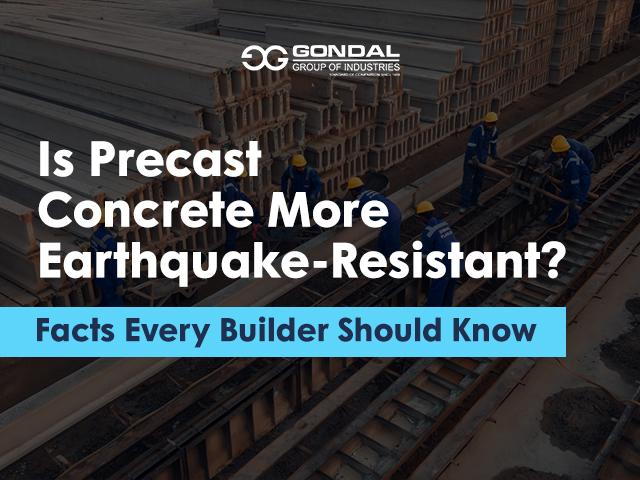

Earthquakes pose a serious risk to buildings, particularly in regions where seismic activity is a concern. In Pakistan, ensuring structural safety is a key priority for builders and developers. One common question in modern construction is whether precast concrete offers better earthquake resistance compared to traditional construction methods. Understanding how precast systems perform under seismic conditions helps builders make informed decisions for safer and more resilient structures.
Understanding Earthquake Forces on Buildings
During an earthquake, buildings are subjected to lateral forces that cause shaking, movement, and stress on structural components. The ability of a structure to resist these forces depends on its design, material strength, and flexibility. Poorly designed or constructed buildings are more likely to suffer damage or collapse under seismic stress.
Earthquake-resistant construction focuses on absorbing and distributing these forces without compromising structural integrity. This requires strong connections, proper load paths, and materials that can perform reliably under dynamic conditions.
What Makes Precast Concrete Different?
Precast concrete differs from traditional cast-in-place concrete because it is manufactured in controlled factory environments. Components such as beams, columns, slabs, and panels are produced with precise dimensions and consistent material quality.
This controlled production ensures higher strength and uniformity, which are important factors in seismic performance. However, the key to earthquake resistance in precast construction lies not only in the material itself but also in how the components are connected and assembled.
Strength and Durability of Precast Components
Precast concrete components are designed to meet specific load requirements, including seismic loads. The use of high-quality materials and controlled curing processes results in strong and durable elements that can withstand significant stress.
These components are engineered to perform under various conditions, providing a solid foundation for earthquake-resistant structures. Their consistent quality reduces the risk of weak points within the building.
Importance of Connection Design
One of the most critical factors in the seismic performance of precast concrete structures is the design of connections between components. During an earthquake, these connections must be able to transfer forces effectively without failing.
Modern precast systems use advanced connection technologies that allow controlled movement and energy dissipation. Properly designed connections can absorb seismic energy and reduce the impact of vibrations on the structure.
Without strong and flexible connections, even high-quality precast components may not perform well during an earthquake. Therefore, engineering design plays a crucial role in overall performance.
Flexibility and Energy Dissipation
Earthquake-resistant structures need a balance between strength and flexibility. While concrete is a strong material, it must also allow some movement to absorb seismic forces.
Precast systems can be designed to incorporate flexibility through joint detailing and reinforcement strategies. This allows the structure to dissipate energy and reduce stress concentrations during seismic events.
When designed correctly, precast concrete structures can perform as well as, or even better than, traditional systems in earthquake conditions.
Comparison with Traditional Construction
Traditional cast-in-place concrete structures can also be designed for earthquake resistance, but their performance depends heavily on on-site workmanship and quality control.
Precast concrete offers an advantage in terms of consistency and precision, as components are manufactured under controlled conditions. This reduces the risk of defects and ensures that each element meets design specifications.
However, both precast and traditional systems require proper engineering, design, and construction practices to achieve effective seismic performance.
Role of Engineering Standards and Codes
Building codes and engineering standards play a vital role in ensuring earthquake resistance. In Pakistan, compliance with seismic design guidelines is essential for all construction projects.
Precast concrete systems must be designed according to these standards, including considerations for load calculations, reinforcement, and connection detailing. Adhering to these guidelines ensures that structures are capable of withstanding seismic forces.
Applications in Seismic Zones
Precast concrete is widely used in regions with seismic activity, including residential, commercial, and industrial buildings. Its ability to provide strong, durable components with precise engineering makes it suitable for earthquake-resistant construction.
From structural frames to boundary walls and infrastructure elements, precast solutions can be adapted to meet the requirements of seismic zones.
Making the Right Choice for Safer Construction
Choosing precast concrete for earthquake-resistant construction depends on proper design, engineering expertise, and quality manufacturing. When these factors are combined, precast systems can offer reliable performance and enhanced safety.
Builders should work with experienced manufacturers and engineers to ensure that all components and connections are designed to meet seismic requirements.
Building for Safety and Reliability
Earthquake resistance is not determined by a single material but by the overall design and construction approach. Precast concrete, when properly engineered, provides strong, consistent, and reliable building components that contribute to safer structures.
With advanced manufacturing processes and a focus on quality, Gondal Group of Industries supports construction projects by delivering precast solutions that meet modern safety and performance standards.