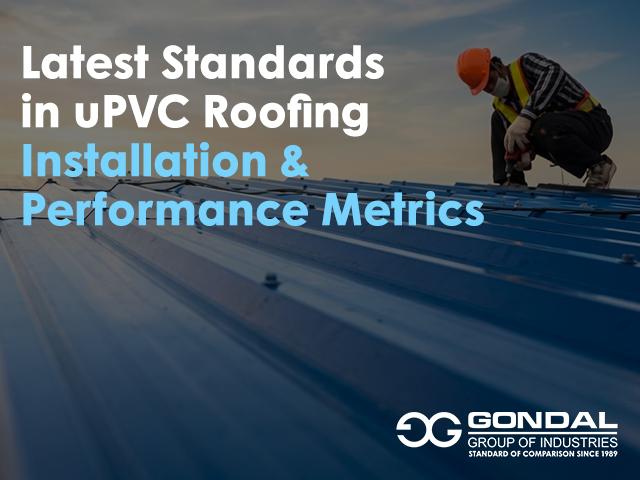

As the construction industry continues to evolve, roofing standards are becoming increasingly focused on durability, safety, energy efficiency, and long-term performance. For builders, architects, and facility owners in Pakistan, understanding the latest installation standards and performance metrics for uPVC roofing is essential to maximize roof lifespan and ensure compliance with modern construction requirements.
With growing adoption across industrial, commercial, and agricultural sectors, uPVC roofing systems are now expected to meet higher performance benchmarks than ever before.
Why Roofing Standards Matter
A high-quality roofing material alone cannot guarantee long-term performance. Proper installation practices, structural design considerations, and performance testing all play an important role in ensuring roofing systems function effectively throughout their service life.
Modern roofing standards focus on key areas such as:
- Wind resistance
- Water tightness
- Thermal performance
- UV resistance
- Structural load capacity
- Fire performance
- Impact resistance
These benchmarks help builders evaluate roofing systems based on measurable performance rather than simply material cost.
Improved Installation Standards for 2026
One of the most important developments in modern roofing practices is the emphasis on correct installation methods.
Industry guidance now places greater focus on accommodating thermal expansion and contraction in roofing sheets. Since uPVC expands more than steel under temperature changes, installation standards increasingly recommend the use of slotted fixing holes, appropriate fasteners, and flexible sealing systems to prevent stress cracking and premature failure. Proper fastening torque and the use of EPDM sealing washers are also considered essential for maintaining long-term roof integrity.
For industrial buildings in Pakistan, these installation practices are especially important because of extreme summer temperatures and large daily temperature fluctuations.
Wind Uplift Resistance Requirements
Wind resistance has become a major performance metric for modern roofing systems.
Current roofing standards place increased emphasis on roof fastening patterns, structural support spacing, and uplift resistance testing. Modern roofing assemblies are expected to withstand strong wind loads without panel displacement or structural damage.
For industrial warehouses, factories, and logistics facilities, roofing systems should be designed according to local wind load requirements and building codes to ensure long-term reliability. Field testing and performance verification methods for uplift resistance continue to play an important role in roofing quality assurance.
Thermal Performance and Energy Efficiency
Energy efficiency is becoming a central consideration in roofing specifications worldwide.
Modern performance standards increasingly evaluate roofing systems based on solar reflectance, thermal insulation, and heat transfer characteristics. Roofs that reduce heat absorption help lower indoor temperatures and decrease cooling energy requirements.
For Pakistan's climate, thermal performance is particularly important. Advanced uPVC roofing systems are now designed to provide better insulation and lower heat gain compared to many traditional roofing materials.
Solar reflectance and thermal performance measurements are widely used as indicators of roofing efficiency.
Water Tightness and Leak Prevention
Water resistance remains one of the most critical roofing performance indicators.
Modern installation standards require proper overlap dimensions, sealing methods, flashing details, and drainage design to prevent water penetration. Testing procedures increasingly focus on long-term water migration resistance and waterproofing performance under challenging weather conditions.
For facilities located in regions affected by heavy monsoon rainfall, compliance with these principles significantly reduces the risk of leaks and water-related damage.
UV Resistance and Weathering Performance
Prolonged sun exposure can significantly affect roofing materials.
Modern uPVC roofing systems are evaluated for their ability to resist UV degradation, discoloration, surface chalking, and mechanical deterioration over extended periods. Advanced formulations now include enhanced UV stabilizers that improve long-term weathering performance.
Performance testing for outdoor exposure and weather simulation has become increasingly important when assessing roofing quality and expected lifespan.
Impact Resistance Standards
Industrial roofing systems must often withstand environmental impacts such as hail, debris, and maintenance traffic.
As a result, impact resistance has become a key performance metric. Modern roofing materials are tested for both static and dynamic puncture resistance to ensure they maintain structural integrity under stress. Higher impact resistance reduces repair frequency and extends roof lifespan.
Fire Performance Expectations
Fire safety requirements are receiving greater attention across the global construction industry.
Modern roofing standards increasingly assess fire performance classifications and external fire exposure resistance. Builders are now expected to consider roofing systems not only for durability and weather protection but also for compliance with evolving fire safety requirements.
Although requirements vary by project type and jurisdiction, fire performance is becoming a standard evaluation criterion for modern roofing systems.
Quality Assurance During Installation
Another emerging trend is the increased emphasis on quality assurance throughout the installation process.
Modern roofing guidelines encourage project inspections, installation verification, and performance checks to ensure roofing systems are installed according to manufacturer recommendations and engineering specifications.
Quality assurance practices help identify potential issues early and improve overall roof performance throughout its service life.
What Builders and Designers Should Prioritize
When selecting a uPVC roofing system in 2026, builders and designers should evaluate more than just price. Key performance indicators include:
- Structural load capacity
- Wind resistance
- Thermal efficiency
- UV durability
- Water tightness
- Impact resistance
- Fire performance
- Installation quality
A roofing system that performs well across these categories will provide greater durability, lower maintenance costs, and better long-term value.
Conclusion
The latest standards in uPVC roofing installation and performance are focused on creating safer, more durable, and energy-efficient buildings. Advances in fastening methods, thermal performance, weather resistance, and quality assurance are helping roofing systems achieve higher levels of reliability than ever before.
As industrial and commercial construction continues to grow in Pakistan, following modern roofing standards will be essential for maximizing performance and protecting long-term investments. Companies like Gondal Group of Industries continue to support this evolution by providing advanced uPVC roofing solutions designed to meet the demands of modern construction.