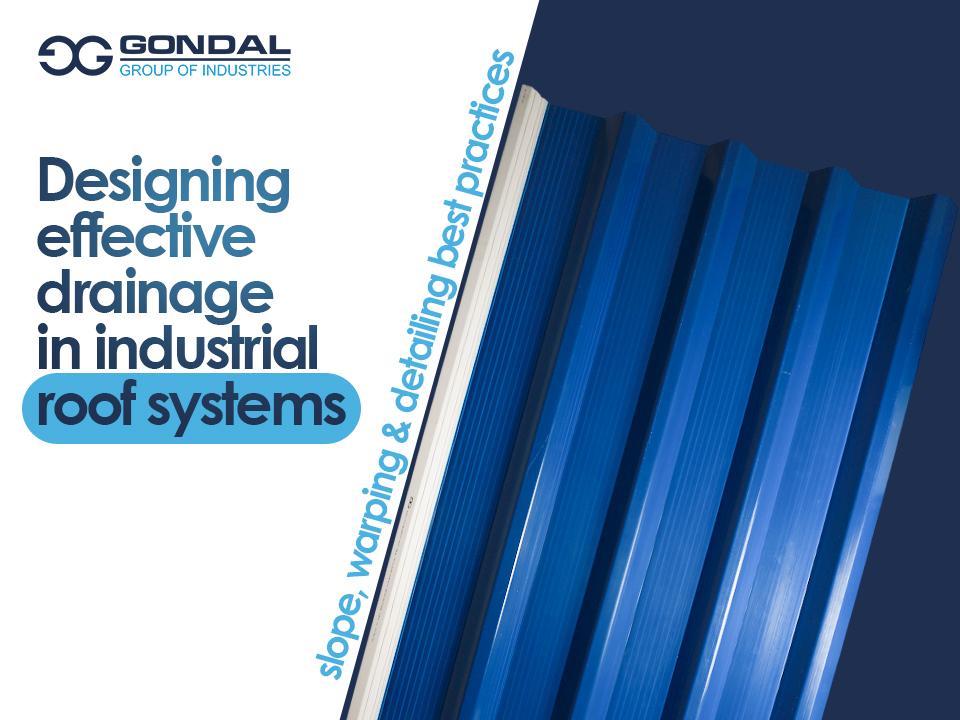

One of the most crucial aspects of large-scale construction projects in Pakistan is ensuring effective drainage in industrial roof systems.
But why?
Because, ineffective drainage systems create the possibility of water pooling, leakage, structural damage and the problems in maintenance.
Let’s discuss how industrial roof systems should be designed for proper drainage, focusing on important aspects such as slope, warping prevention, and elaborating the best practices to make the industrial roofs last longer and work better:
Understanding Drainage In Industrial Roof Systems
Drainage refers to collectinga dn directing water off form the roof. In the case of industrial roofs, particularly the ones whose surface area is big, effective drainage keeps the water in check and avoids overloading the roof.
The choice of roofing also matters in such circumstances, uPVC roofing is better than steel and concrete. But you still need to incorporate water management during the design phase, because without proper drainage in industrial roof systems, even the most advanced roofing products can fail prematurely.
Why Drainage In Industrial Roof Systems Is Important?
- It eliminates structural loading of standing water.
- It removes seepage which causes leaks and corrosion.
- It shields the wall cladding, insulation, and equipment against moisture damage.
- It elonagets the overall lifespan of the roofing material.
Designing The Right Slope For Effective Drainage
The first rule of an efficient industrial roof is proper roof slope design. The slope allows water to naturally flow toward designated drainage points.
What Are The Recommended Slopes?
- For metal roofing sheets, the minimum slope is usually between 3° to 12°,
- For uPVC sheets the minimum slope is between 5° to 15°, depending on sheet type and rainfall intensity.
- For flat or low-slope concrete roofs, a minimum slope of ¼ inch per foot (or a 2% slope) is recommended.
Pro Tip: Always design slopes toward gutters, downspouts, or internal drains, and avoid dead-flat surfaces as even slight imperfections can cause pooling.
Managing Warping And Structural Movement
Industrial roofing systems in the unpredictable climatic conditions of Pakistan may undergo thermal expansion, contraction, and slight warping. Unless this motion is taken into consideration during design, it may influence slop alignment, and make water stagnant.
Best Practives To Minimize Warping
- Install roofing materials of high quality such as uPVC or steel, which is designed to withstand deformation.
- Introduce expansion joints in large-span roofs.
- Make sure that trusses and purlins are placed in such a way that they donot sag in the direction of the drainage.
- Regularly inspect roofs for structural shifts, especially after storms or temperature rise.
- Choose roofing solutions such as, Gondal’s Plsline, that is buoilt to be light-weight yet dimensionally stable, and their shape is preserved even in the presence of extreme temperatures, weather heat or cold.
Detailing For Seamless Waterflow
Appropriate detailing makes the water flow easily on the surface and run out through drainage or gutters effectively.
Here are some key detailing tips:
- Interlocking panels: This involves profile designs that interlock in such a way that there is no leakage and the water flows in the gutters.
- Ridge and valley flashing: Intall high-quality flashings at ridges and valleys to direct the flow of runoff in the right way to avoid seepage.
- Gutters and downspouts: Choose non corrosive materials and install downspouts at appropproiate positions to carry the amount of downpour.
- Sealing and caps: Use PVC screw caps, foam closers, and waterproof sealants to secure joints and block water entry.
Pro Tip: Always consider the amount of intensity of rainfall in your area. Peak rainfall can be dealt with by designing wider gutters and sufficient distance between outlets.
Regular Maintenance
Even with the best designs and roofing materials, maintenance plays a key role in the long-term success of any roof drainage system. Leaves, debris, and dust can block gutters or create small dams that interfere with water flow.
Here are some best maintenance practices:
- Schedule roof inspections at least twice a year.
- Clear drains, gutters, and downspouts regularly.
- Check roof joints and sealants after every heavy rain.
- Routine cleaning ensures that the drainage system performs as designed
Designing Effective Drainage In Industrial Roof Systems For Durability In Pakistan’s Climate
In Pakistan, there is a variety of climate, with heavy monsoons, heavy humidity, and the occasional storms. Therefore, proper drainage in industrial roof systems is not only an option but a necessity.
By focusing on proper slope design, controlling warping, and detailed water management features, you can make your industrial roofing more efficient and reliable