
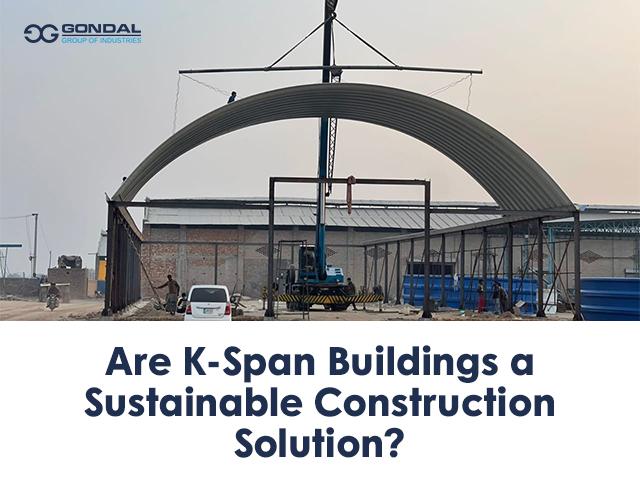
Sustainability has become an important consideration in modern construction. Businesses, developers, and governments are increasingly looking for building solutions that reduce environmental impact while maintaining durability and cost efficiency.
K-Span buildings are often discussed as a more sustainable alternative to traditional construction buildings. Their efficient use of materials, faster construction process, and long service life contribute to a lower overall environmental footprint. Understanding how K-Span technology supports sustainable construction helps explain why it is gaining attention in industrial and commercial development.
Efficient Use of Materials
One of the key sustainability advantages of K-Span buildings is their efficient use of construction materials.
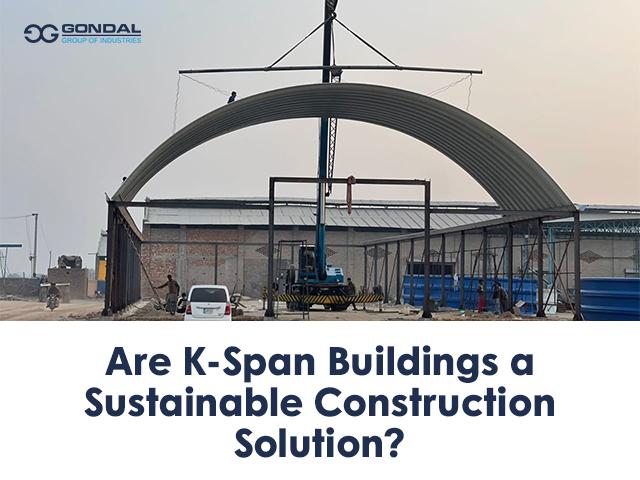
Traditional building systems often require large amounts of steel, concrete, and structural components such as beams, columns, and trusses. K-Span structures, however, rely on a self-supporting arch design that reduces the need for these additional materials.
The building panels are formed from galvanized steel coils and shaped into curved sections that distribute loads evenly. Because the arch structure provides natural strength, less steel is required to achieve the same structural performance.
This reduced material usage lowers both construction costs and the environmental impact associated with manufacturing and transporting building materials.
Reduced Construction Waste
Construction waste is a significant environmental concern in many traditional building projects. Excess materials, packaging, and off-cuts often end up in landfills.
K-Span technology helps minimize construction waste because the steel panels are produced directly at the building site using roll-forming machines. The panels are manufactured to the exact length required, reducing the need for cutting and trimming during installation.
As a result, the construction process becomes more efficient, with far less material waste compared to conventional building methods.
Faster Construction and Lower Energy Use
Another sustainability benefit of K-Span buildings is their rapid construction process.
Traditional construction projects often require extended timelines involving multiple contractors, heavy machinery, and repeated transportation of materials. These activities contribute to higher energy consumption and increased emissions.
K-Span structures are manufactured and assembled on-site, which significantly reduces transportation requirements and shortens the construction schedule.
Shorter construction timelines mean less fuel consumption, reduced machinery operation, and lower overall energy use during the building process.
Durability and Long Service Life
Sustainable construction is not only about reducing environmental impact during construction—it also involves creating buildings that last for many years without requiring major repairs or reconstruction.
K-Span buildings are designed to be highly durable. The galvanized steel panels used in these structures provide strong resistance against corrosion, moisture, and environmental damage.
The arch design also improves structural stability, allowing the building to withstand wind, rain, and other environmental stresses.
Because these structures can remain functional for decades with minimal maintenance, fewer resources are needed for repairs or rebuilding over time.
Potential for Energy Efficiency
K-Span buildings can also support energy-efficient building designs.
Insulation materials can be installed within the structure to improve thermal performance, helping regulate indoor temperatures. This can reduce the energy required for heating or cooling industrial spaces such as warehouses, workshops, and storage facilities.
Additionally, the curved roof design allows for efficient airflow and ventilation, which can further improve indoor environmental conditions and reduce reliance on mechanical climate control systems.
Recyclable Steel Components
Steel is one of the most recyclable construction materials available. The steel used in K-Span buildings can be recycled at the end of the structure’s lifespan, reducing waste and supporting circular construction practices.
Many steel products already contain recycled content, which further reduces the environmental impact of manufacturing new materials.
This recyclability makes K-Span structures more environmentally responsible compared to building systems that rely heavily on materials that cannot be reused or recycled.
Reduced Foundation Requirements
Another factor contributing to sustainability is the reduced foundation requirement for K-Span buildings.
Because the arch structure distributes loads efficiently across the base of the building, heavy foundations are often not necessary. This reduces the amount of concrete required during construction.
Concrete production is known to contribute significantly to global carbon emissions. By minimizing foundation needs, K-Span buildings can help reduce the overall carbon footprint of a construction project.
Adaptability and Reusability
K-Span structures can also be adapted for different uses over time. Industrial buildings often change function as business needs evolve.
The clear-span interior design allows businesses to modify layouts easily without major structural changes. This adaptability extends the useful life of the building and reduces the need for new construction.
In some cases, components of steel structures can also be reused or relocated, further improving sustainability.
Balancing Sustainability with Practical Construction
While K-Span buildings offer many sustainability advantages, it is important to consider them as part of a broader construction strategy. Factors such as insulation quality, energy systems, and building location also influence overall environmental performance.
When combined with energy-efficient design practices and responsible construction management, K-Span buildings can contribute to more sustainable industrial development.
Conclusion
K-Span buildings offer several characteristics that support sustainable construction. Their efficient use of materials, reduced construction waste, rapid installation, and durable steel construction all contribute to a lower environmental impact compared to many traditional building methods.
Additionally, the recyclability of steel, reduced foundation requirements, and potential for energy efficiency make K-Span structures an environmentally responsible option for industrial and commercial projects.
As the construction industry continues to prioritize sustainability, K-Span technology provides a practical solution that balances environmental responsibility with cost-effective and reliable building performance.