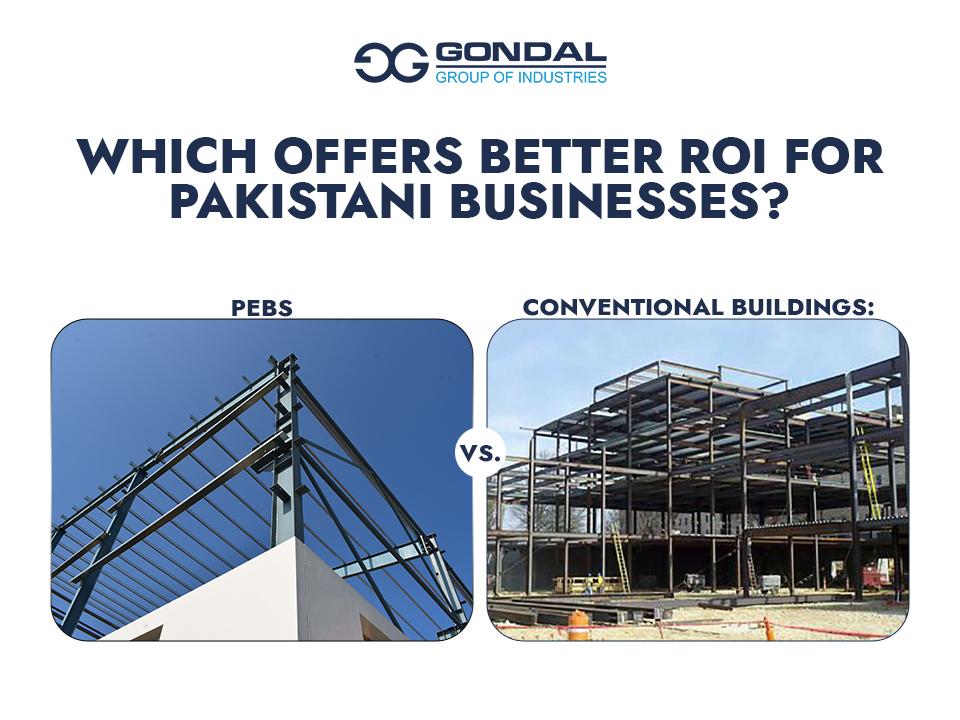

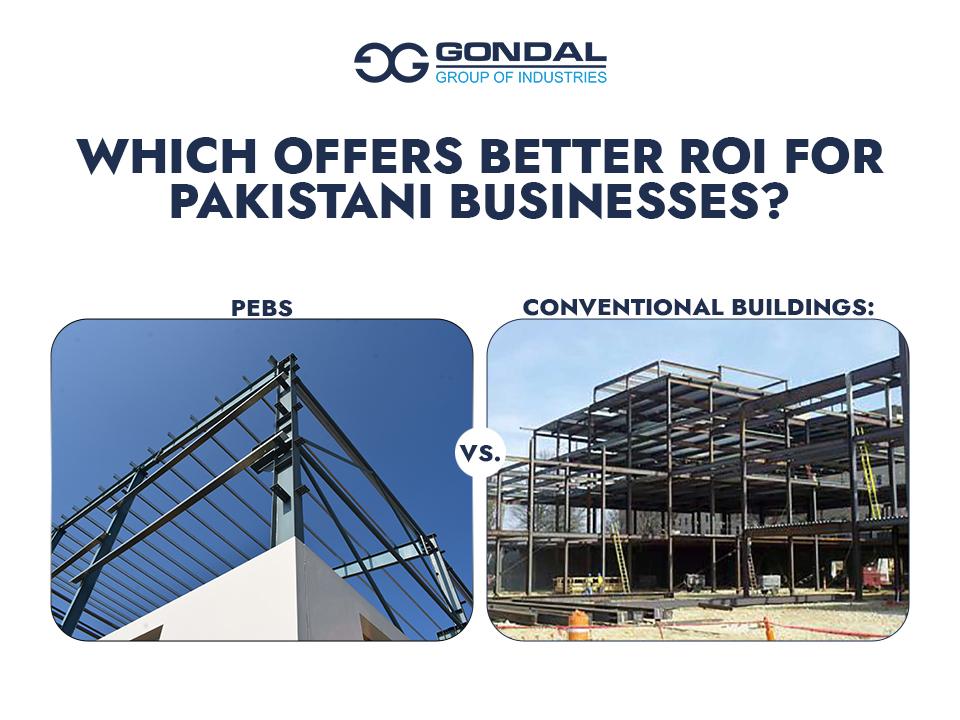
The debate between PEBS and conventional buildings is becoming increasingly relevant to industrial and commercial construction facilities in Pakistan.
SMES and large-scale businesses are searching for cost-efficient and durable structures, which requires businesses to understand the ROI of such construction types.
This blog examines the major cost elements, maintenance needs, and long-term market value between Pre-engineered buildings(PEBS) and conventional buildings to help businesses operate in their decision-making.
Difference Between PEBS and Conventional Buildings
Pre-engineered metal buildings refer to construction metal buildings that are prefabricated and pre-manufactured and can easily be tailored to the needs of the hour during the construction process at the site.
Conventional buildings, on the other hand, are constructed using bricks, cement, sand and concrete, that too built on-site with extended construction periods.
Cost Comparisons: PEBS vs Conventional Buildings
- Material Costs
PEBS incorporate high-strength metal steel that might incur upfront initial costs but is precisely optimised for its lead-bearing capacity. The controlled factory site production makes it possible to require less material and eliminate unnecessary waste.
Conventional Buildings use various raw materials through a combination of bricks, cement, sand and steel bars. The complete expenses of acquiring materials, transportation costs, and handling operations increase both direct and indirect expenses.
In this regard, PEBS win the debate as PEBS streamline fabrication and reduces material wastage, which ultimately reduces overall material expenditure.
- Labour Costs
The construction of PEB components reduces on-site labour needs because pre-fabricated components are assembled on-site using cranes executed by skilled technicians.
Construction of conventional buildings depends heavily on manual labour throughout their entire construction process, from laying the foundation to structural completion and finishing work.
PEBS are much more cost-effective in this regard, in comparison with conventional buildings, as they reduce project dependencies on daily-wage labour, so delays and escalated costs remain under control.
- Construction Time
PEBS enable faster construction time to complete 30-50% compared to regular buildings, which enables quicker occupancy and revenue generation.
Construction of conventional buildings often faces construction delays because of labour shortages combined with heavy weather factors, as well as unexpected shortages of building materials.
PEBS win this debate as well, and the winning aspect of PEBS lies in its ability to execute operations at a faster rate, thus minimising opportunity expenses.
Maintenance And Operational Costs
|
Pre-engineered Buildings(PEBS) vs Conventional Buildings |
|
|
|
Pre-engineered buildings win this comparison because they provide better durability, along with reduced maintenance expenses that lead to superior long-term affordability.
Resale And Asset Value
|
Pre-engineered Buildings(PEBS) vs Conventional Buildings |
|
|
Different PEBS types provide businesses with the option of dismantling and moving the structures or selling them to generate profitable assets. |
The depreciation rate of conventional buildings is rapid because of their building materials' age and structural limitations. |
In this regard as well, PEBS emerge as the best choice because of their flexibility, along with higher resale possibilities, providing better investment opportunities.
Environmental Impact Of Construction: PEBS vs Conventional Buildings
The steel used in PEBS remains recyclable, while its installation procedures incur less site waste. PEB construction reduces environmental disturbances at every phase of construction.
On the other hand, Conventional building practices generate large amounts of waste, debris and consume a significant amount of natural resources, thereby contributing to long-term ecological damage.
With environmental, social and government compliance becoming increasingly important, especially for export-driven or internationally funded ventures, PEBS offer Pakistani businesses a greener, more sustainable future.
PEBS vs Conventional Buildings - Long-Term ROI For SMES and Large-Scale Businesses
When comparing PEBS vs conventional buildings, PEBS offer higher ROI, faster installation, lower maintenance, and better long-term adaptability.
For SMES, PEBS offer rapid market entry and allows small businesses to scale operations without larger upfront investments. Sustainable financial operations result from reduced energy expenses and maintenance costs.
For large-scale industries, PEBS provide unmatched flexibility in layout and structural design, which works best for warehouses, factories and logistics centres. Furthermore, reduced construction time and long-term savings in operational efficiency enhance profitability.
When comparing PEBS vs Conventional Buildings, it’s clear that PEBS offer superior ROI, speed, scalability, and sustainability. For Pakistani SMES and large industries alike, Pre-Engineered Buildings deliver more value per rupee spent, making them the ideal choice for modern business infrastructure.
Visit Gondal Group’s website and explore how PEBS can transform your business infrastructure