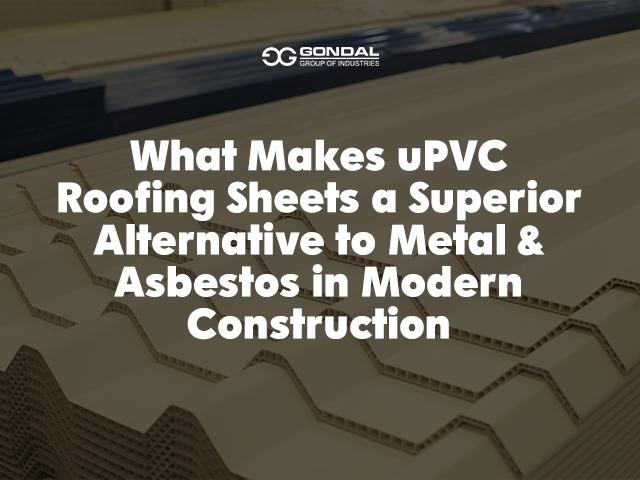

Modern construction demands roofing materials that are safe, durable, and cost-efficient over the long term. While metal and asbestos sheets were once widely used, growing concerns around corrosion, maintenance, and health risks have led the industry to adopt more advanced solutions. uPVC roofing sheets have emerged as a superior alternative, offering improved performance, safety, and sustainability for industrial and commercial buildings.
Limitations of Traditional Metal Roofing
Metal roofing sheets are commonly used due to their strength, but they come with several long-term challenges. One of the primary issues is corrosion, especially in environments exposed to moisture, chemicals, or coastal air. Over time, rust weakens the structure and increases maintenance costs. Metal roofs also absorb and transfer heat quickly, leading to higher indoor temperatures and increased cooling expenses. Noise during rainfall and thermal expansion are additional concerns that can impact comfort and structural stability.
Health and Safety Concerns with Asbestos Roofing
Asbestos roofing sheets were popular in the past because of their affordability and fire resistance. However, asbestos is now widely recognized as a serious health hazard. When damaged or disturbed, asbestos fibers can become airborne and pose significant risks to human health. Many regions have restricted or banned its use, making asbestos an unsuitable option for modern construction projects that prioritize safety and regulatory compliance.
Durability and Corrosion Resistance of uPVC
uPVC roofing sheets are engineered to withstand harsh environmental conditions without degrading. Unlike metal, uPVC does not rust or corrode, even when exposed to moisture, chemicals, or industrial pollutants. Its non-reactive nature ensures long-term structural stability and consistent performance, making it particularly suitable for industrial and manufacturing facilities.
Better Thermal and Acoustic Performance
One of the key advantages of uPVC roofing sheets is their ability to regulate temperature more effectively than metal or asbestos. uPVC reflects heat and reduces thermal transfer, helping maintain cooler indoor environments. This improves working conditions and lowers energy consumption for cooling systems. Additionally, uPVC sheets offer better sound insulation, significantly reducing noise from rain or external sources.
Lightweight Design and Faster Installation
uPVC roofing sheets are lightweight compared to metal and asbestos, reducing the load on supporting structures. This allows for simpler structural designs and faster installation. Easier handling also minimizes labor requirements and shortens construction timelines, making uPVC an efficient choice for large-scale projects.
Low Maintenance and Long-Term Cost Savings
Maintenance requirements are a major consideration in roofing material selection. Metal roofs often require periodic painting, rust treatment, and repairs, while asbestos sheets degrade over time and require careful handling. uPVC roofing sheets require minimal maintenance due to their non-porous surface and resistance to environmental damage. This translates into lower lifecycle costs and fewer operational disruptions.
Environmental and Regulatory Advantages
uPVC roofing supports modern sustainability goals by offering a long service life and energy efficiency benefits. Reduced replacement frequency lowers material waste, while improved insulation helps decrease energy usage. Asbestos-free construction also ensures compliance with current health and environmental regulations, reducing legal and safety risks.
A Modern Roofing Solution for Future-Ready Construction
As construction standards continue to evolve, the demand for safer and more efficient materials grows. uPVC roofing sheets provide a reliable alternative to metal and asbestos by combining durability, thermal efficiency, safety, and cost-effectiveness. With advanced uPVC roofing solutions, Gondal Group of Industries supports modern construction projects that prioritize performance, sustainability, and long-term value.