
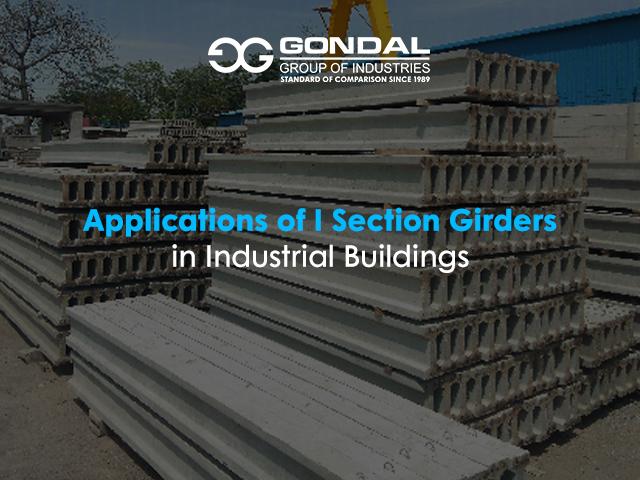
Industrial buildings are designed to support heavy machinery, large roof spans, overhead cranes, and continuous operational loads. To achieve the required structural strength while maintaining construction efficiency, engineers often rely on I section girders as one of the primary load-bearing components. Recognised for their high strength-to-weight ratio and excellent load distribution, I section girders are widely used in factories, warehouses, logistics centres, and commercial structures.
As industrial construction continues to grow across Pakistan, the demand for durable and efficiently engineered structural steel components has increased. I section girders play an important role in creating safe, reliable, and cost-effective buildings capable of meeting modern industrial requirements.
What Is an I Section Girder?
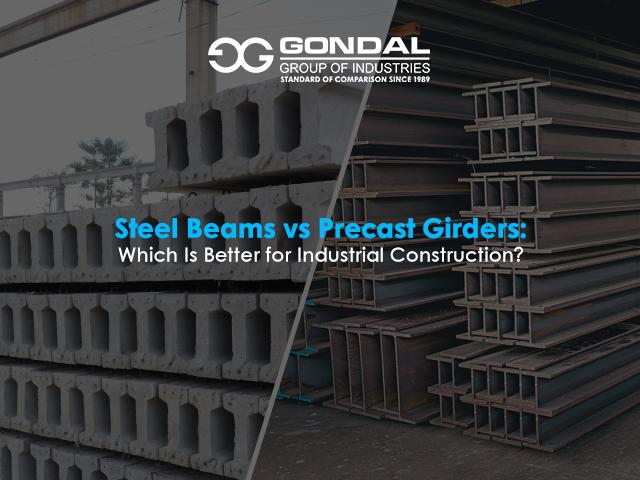
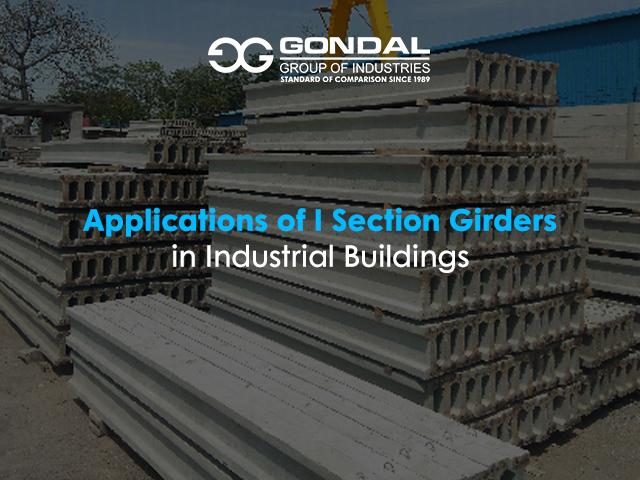
An I section girder is a structural steel member with a cross-section shaped like the capital letter "I." It consists of two horizontal flanges connected by a vertical web, allowing it to carry significant bending loads while using less material than many solid structural sections.
This efficient design provides excellent structural performance, making I section girders one of the most commonly specified components in steel construction projects.
They are available in a range of sizes and grades to suit different building types and loading requirements.
Why I Section Girders Are Popular in Industrial Construction
Industrial buildings require structural systems that combine strength, durability, and efficiency.
I section girders offer several advantages, including:
- High load-bearing capacity
- Excellent strength-to-weight ratio
- Reduced structural weight
- Faster fabrication and installation
- Compatibility with steel building systems
- Long service life with proper maintenance
These characteristics make them suitable for projects where structural reliability and construction speed are equally important.
Supporting Large Roof Spans
One of the most common applications of I section girders is supporting large-span roofing systems.
Factories, warehouses, and logistics centres often require wide, open floor areas without internal columns that could interfere with production lines, storage systems, or vehicle movement.
I section girders provide the structural strength needed to support roofing systems over large distances while maintaining stability and minimizing structural deflection.
This allows industrial facilities to maximize usable floor space and improve operational efficiency.
Structural Frames for Manufacturing Plants
Manufacturing facilities frequently house heavy production equipment and require buildings capable of handling substantial operational loads.
I section girders are commonly incorporated into structural frames where they support roof systems, upper floors, and mechanical equipment.
Their high structural efficiency enables engineers to design buildings that remain strong and stable while optimizing material usage.
Warehouse Construction
Warehouses demand strong structural systems capable of supporting wide roof spans, storage equipment, and loading operations.
I section girders are often used as primary beams within steel-framed warehouses because they distribute loads effectively while allowing flexible building layouts.
Their ability to support large uninterrupted spaces makes them particularly valuable for logistics centres and distribution facilities.
Crane Support Structures
Many industrial buildings utilize overhead cranes for lifting and moving heavy materials.
I section girders are commonly specified for crane runway beams because of their ability to resist repeated loading and maintain structural stability under dynamic operating conditions.
Proper engineering and fabrication ensure these girders meet the specific load requirements of each lifting system.
Multi-Storey Industrial Buildings
As industrial land becomes more valuable, developers are increasingly constructing multi-level industrial and commercial facilities.
I section girders are frequently used to support upper floors, mezzanine levels, and elevated working platforms. Their high load capacity allows buildings to accommodate equipment, storage systems, and personnel while maintaining structural safety.
This makes them suitable for manufacturing complexes, processing facilities, and commercial developments.
Mezzanine Floors and Storage Platforms
Many factories require additional storage or operational space without expanding the building footprint.
Steel mezzanine floors supported by I section girders provide a practical solution for creating extra usable space. These structures are commonly used for inventory storage, equipment platforms, offices, and maintenance areas.
The strength of I section girders enables these systems to support substantial loads while remaining structurally efficient.
Infrastructure Within Industrial Facilities
Beyond the main building frame, I section girders are also used in supporting infrastructure throughout industrial sites.
Common applications include:
- Equipment platforms
- Pipe racks
- Conveyor support structures
- Utility bridges
- Maintenance walkways
- Elevated service platforms
Their versatility allows engineers to design supporting structures that integrate seamlessly with industrial operations.
Advantages Over Conventional Structural Sections
Compared to many traditional structural components, I section girders provide several practical benefits.
Their efficient cross-sectional shape minimizes material usage while maintaining excellent strength. This reduces structural weight, simplifies transportation, and can improve installation efficiency.
Because they are widely used in structural steel construction, I section girders are also compatible with various connection methods and fabrication techniques, allowing projects to progress more quickly.
Choosing the Right Girder for the Project
Selecting the correct I section girder depends on several engineering considerations, including:
- Building span
- Expected structural loads
- Roof design
- Equipment requirements
- Crane loads
- Environmental conditions
- Future expansion plans
A qualified structural engineer should evaluate these factors to ensure the selected girder meets both safety standards and project objectives.
Conclusion
I section girders are one of the most important structural components in modern industrial construction. Their ability to support large spans, heavy loads, and complex building systems makes them indispensable for factories, warehouses, logistics centres, and manufacturing facilities.
By combining structural strength with efficient material usage, I section girders help developers create durable and cost-effective industrial buildings that perform reliably for decades. With expertise in industrial construction materials and structural solutions, Gondal Group of Industries supports projects across Pakistan by supplying high-quality products designed to meet the evolving needs of modern construction.